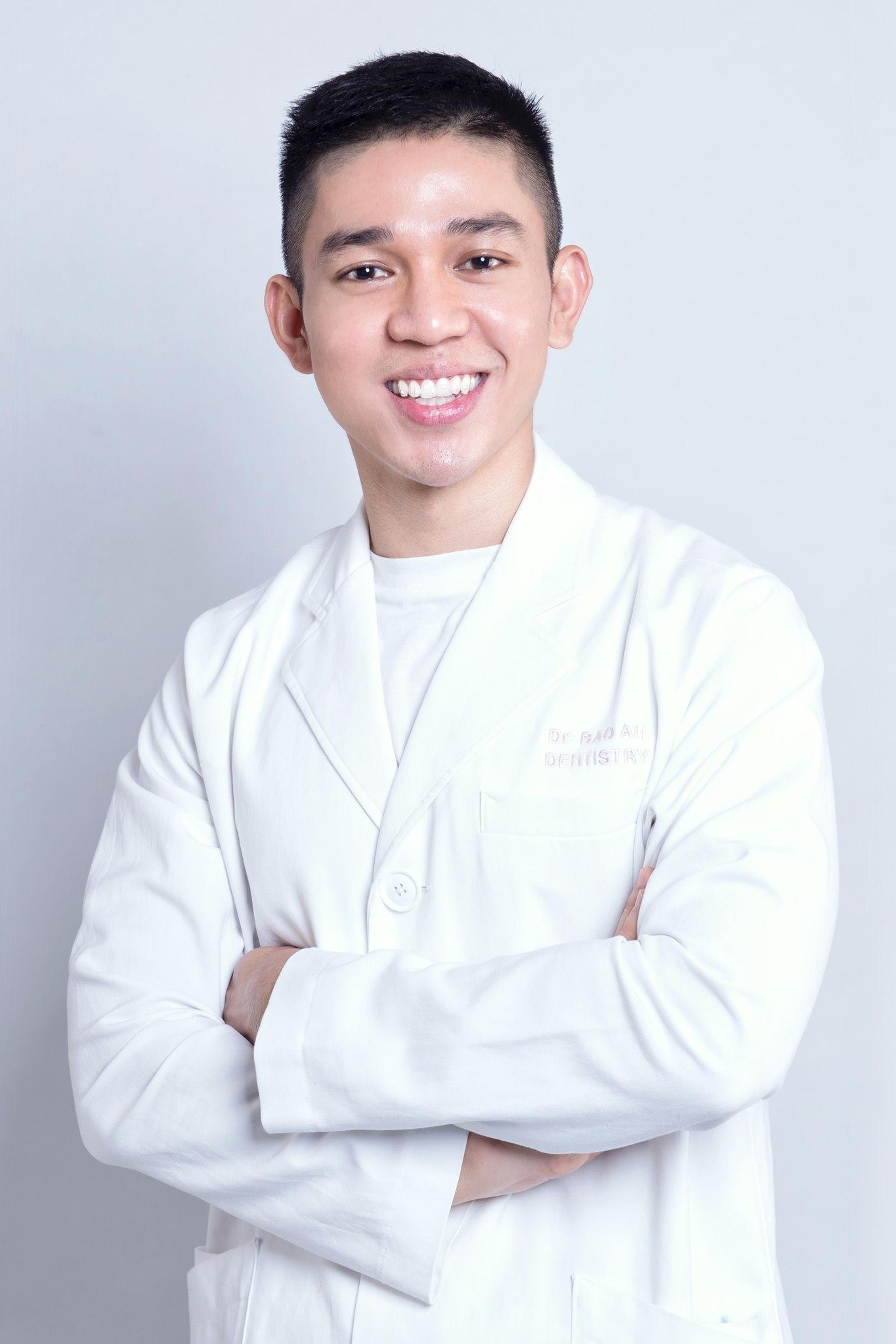
Dr. Hồ Lê Bảo Ân
Invisalign Black Diamond Doctor in Ho Chi Minh City, focused on clear aligner treatment. Extensive clinical experience building individualised treatment plans — combining digital aligner therapy and smile aesthetics (veneers, implants) within a single course of treatment.
Dr Tony Dental — 36-38 Ton That Tung, Ben Thanh Ward, Ho Chi Minh City 70000
Focus of practice
- Protrusion
- Underbite
- Crossbite
- Open bite & deep bite
- Crowding & crooked teeth
- Retreatment of cases that fell short
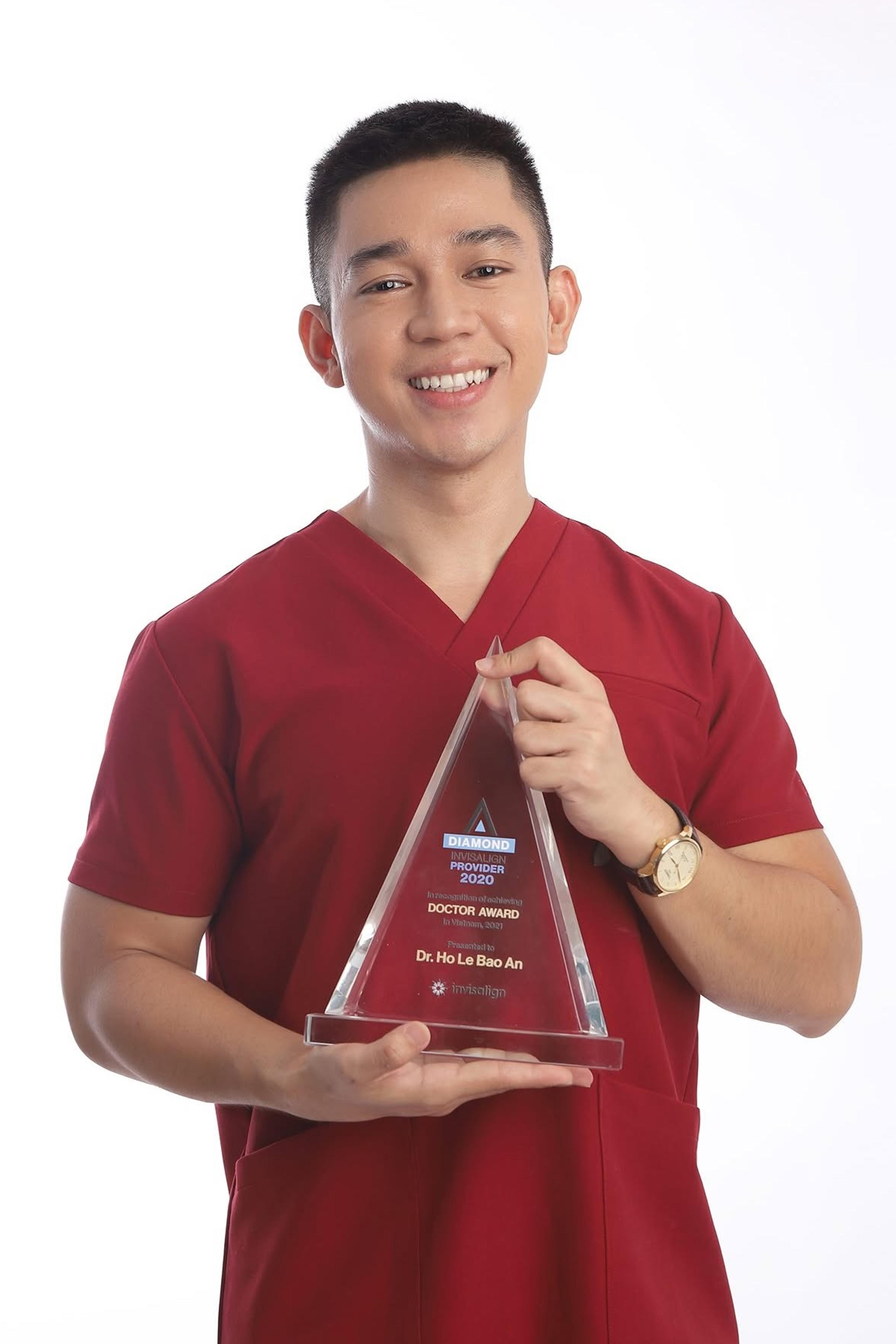
Lifetime Achievement Award
Thousands of successfully completed Invisalign cases
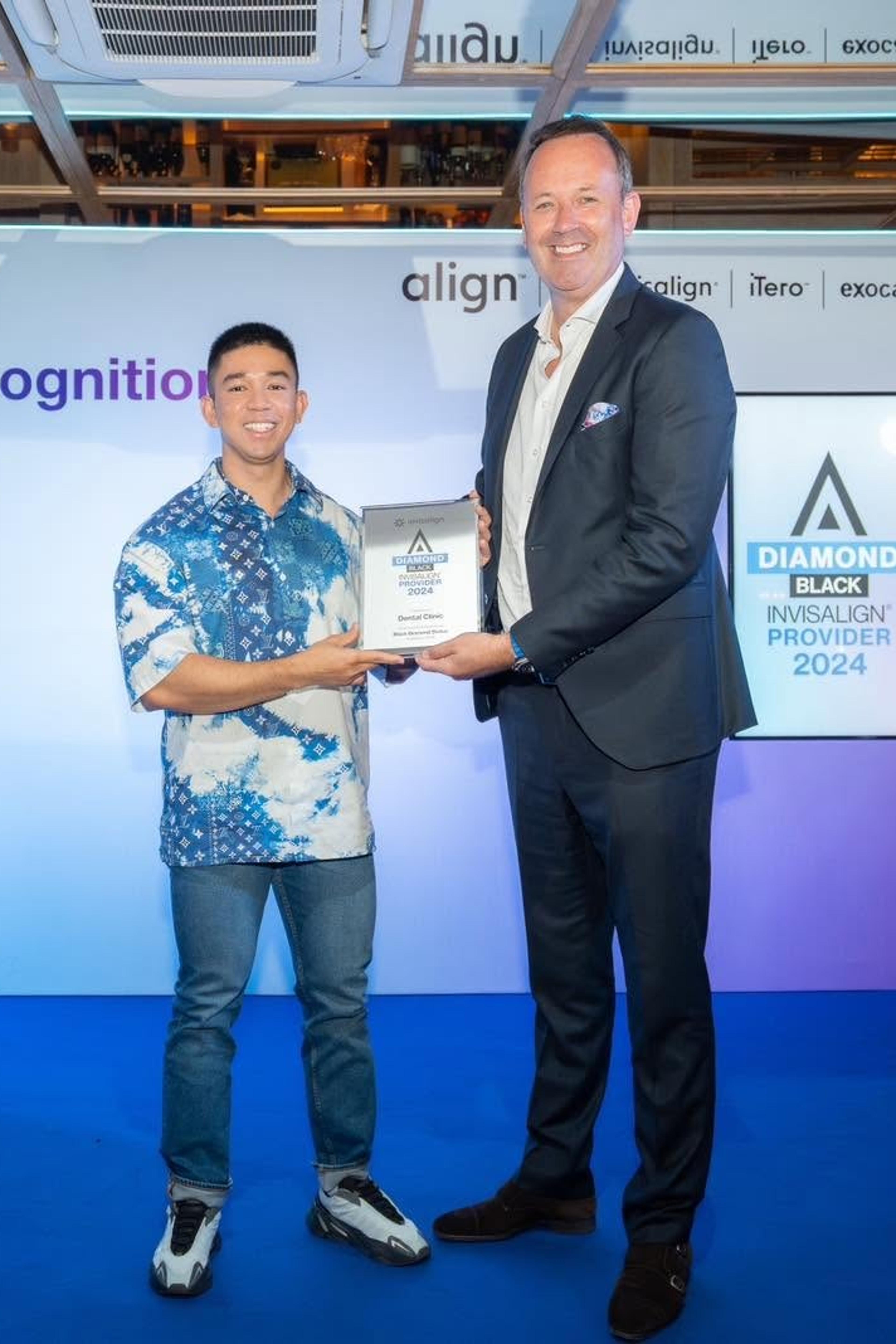
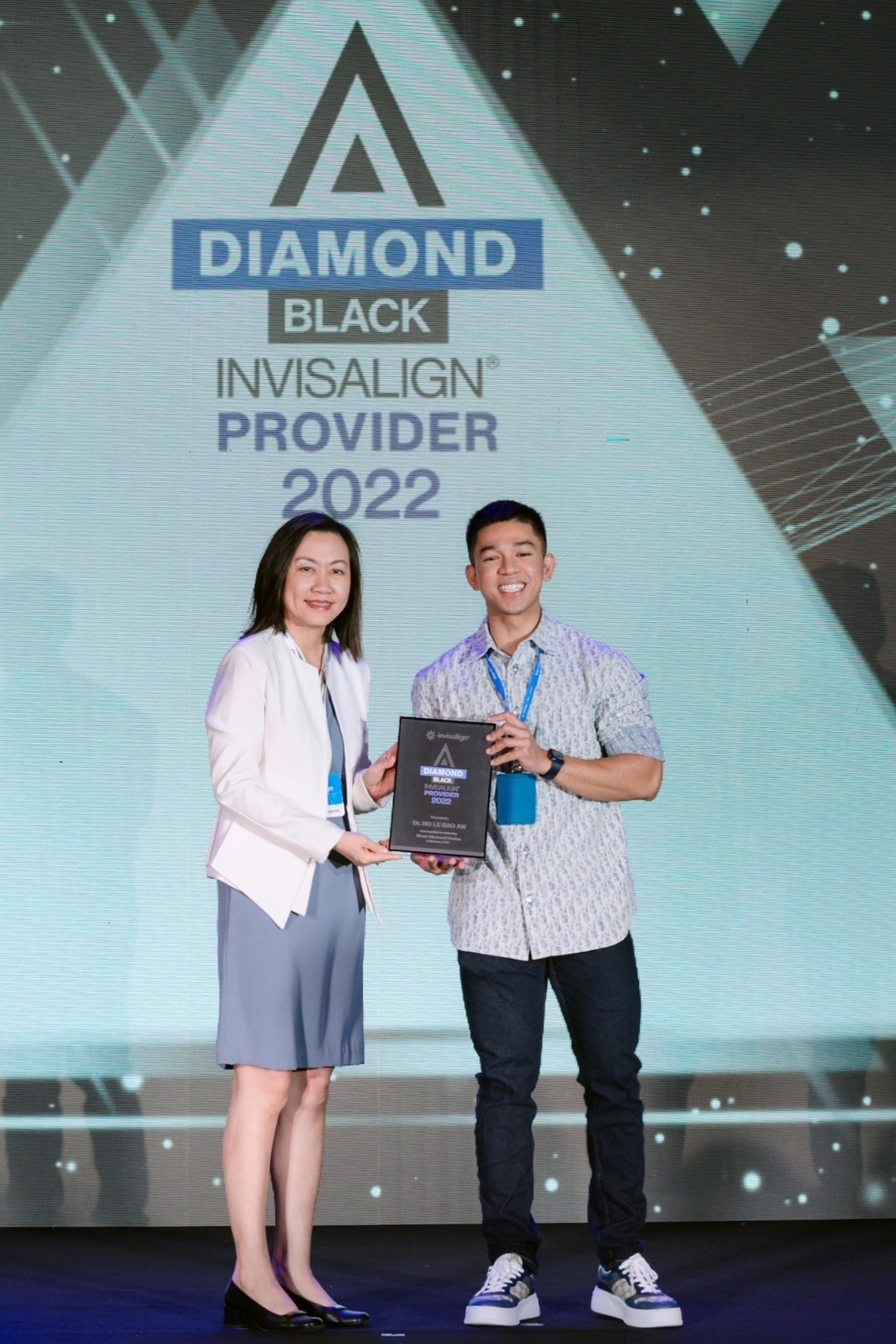
Black Diamond Doctor
A senior expert tier, ranked on cases actually treated
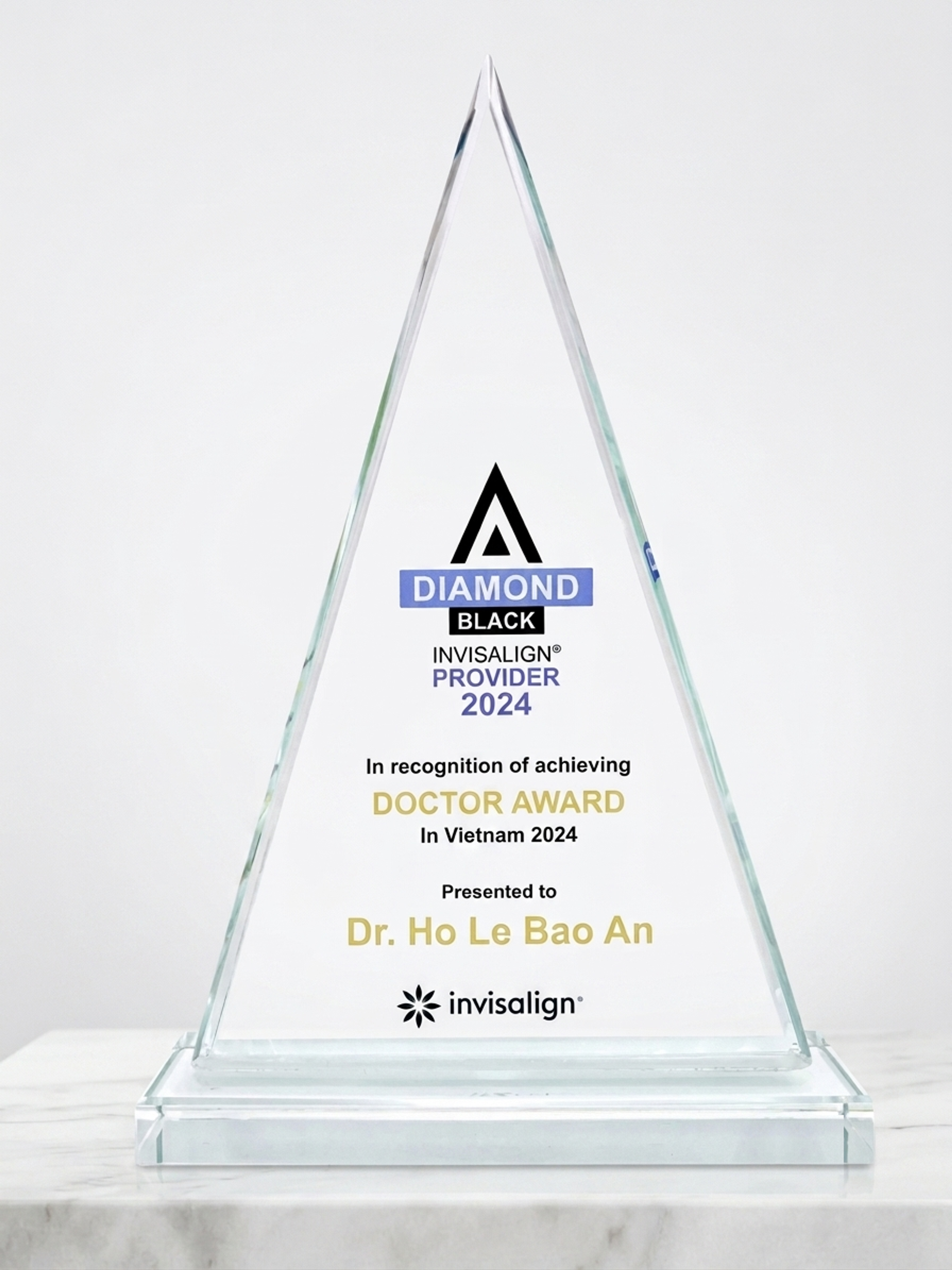
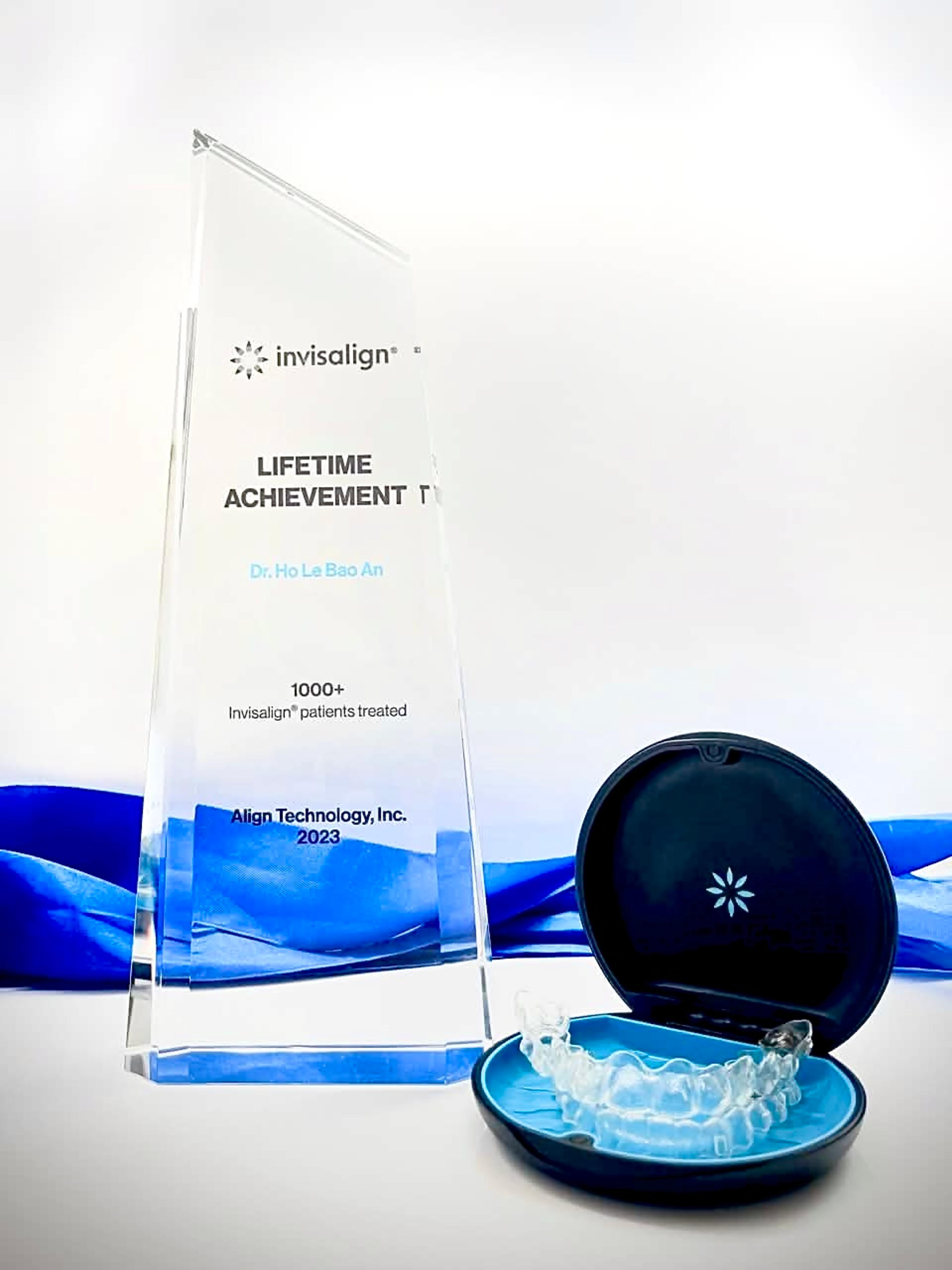
Who is Dr Ho Le Bao An?
Dr Ho Le Bao An is the Medical Director of Dr. Tony Dental (an Invisalign-focused dental clinic) and one of the practitioners who pioneered clear aligner treatment in Vietnam. He graduated with distinction in Odonto-Stomatology from Can Tho University of Medicine and Pharmacy, and holds the inter-university diploma (D.I.U) in oral surgery from the University of Bordeaux, France. Since 2019 he has trained in Invisalign with Align Technology and has kept that advanced training and technology up to date without a break since.
On clinical achievement, Dr Ho Le Bao An holds the Invisalign Black Diamond Doctor designation — a senior expert tier awarded by Align Technology (USA) to the individual clinician, alongside the clinic's own Black Diamond Provider status. He is also the recipient of the prestigious Lifetime Achievement Award.
To date he has brought thousands of Invisalign cases to a successful finish, with particular command of complex malocclusion protocols. Drawing on deep expertise across Invisalign clear aligners, aesthetic porcelain veneers, dental implants and digital smile design, Dr An commits to giving every patient a course of treatment that is individually designed, safe and optimised for aesthetics.
What does Invisalign Black Diamond Doctor mean?
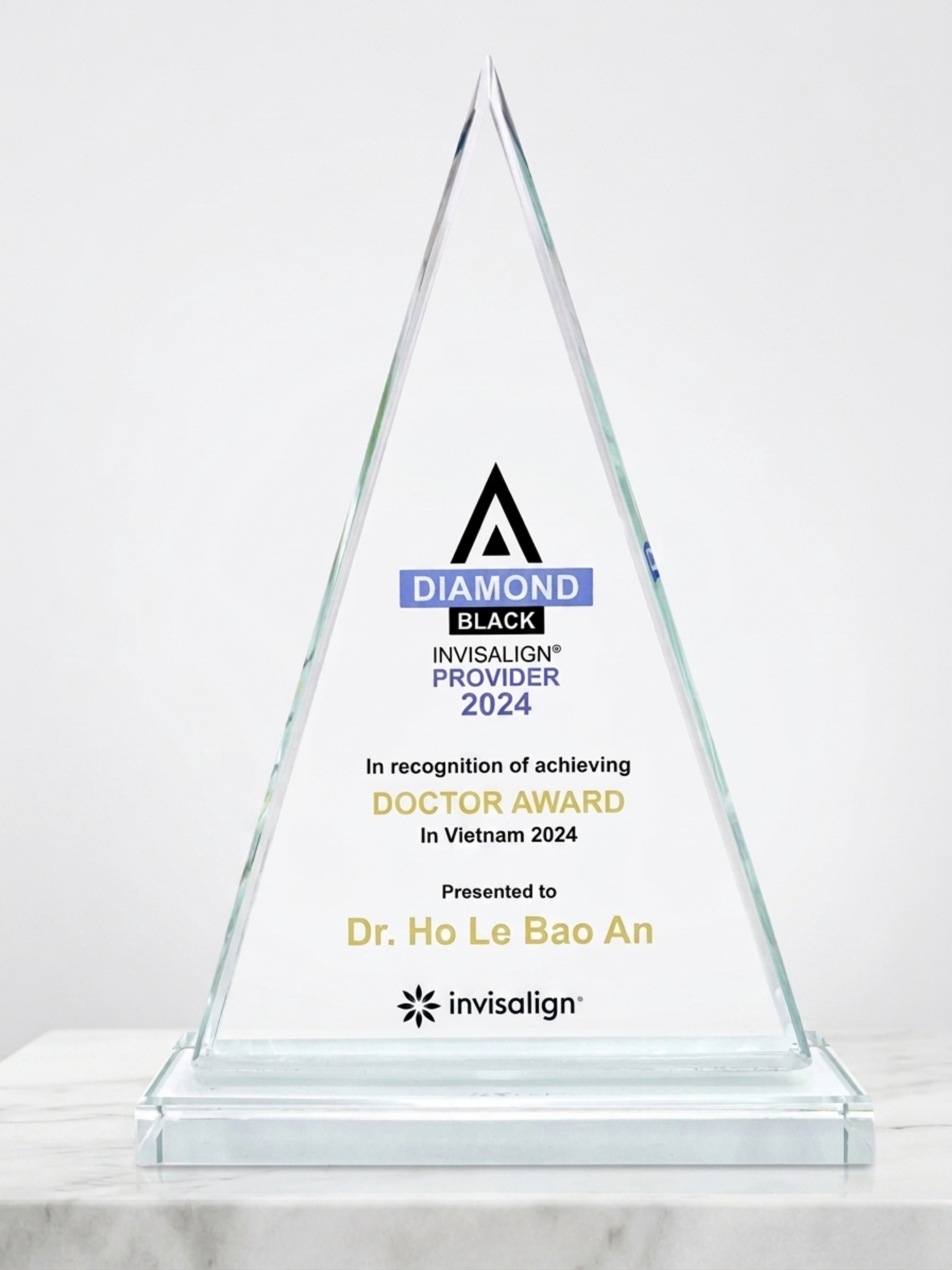
The doctor
Invisalign Black Diamond Doctor
Granted to an individual clinician, based on the cases they personally treat.
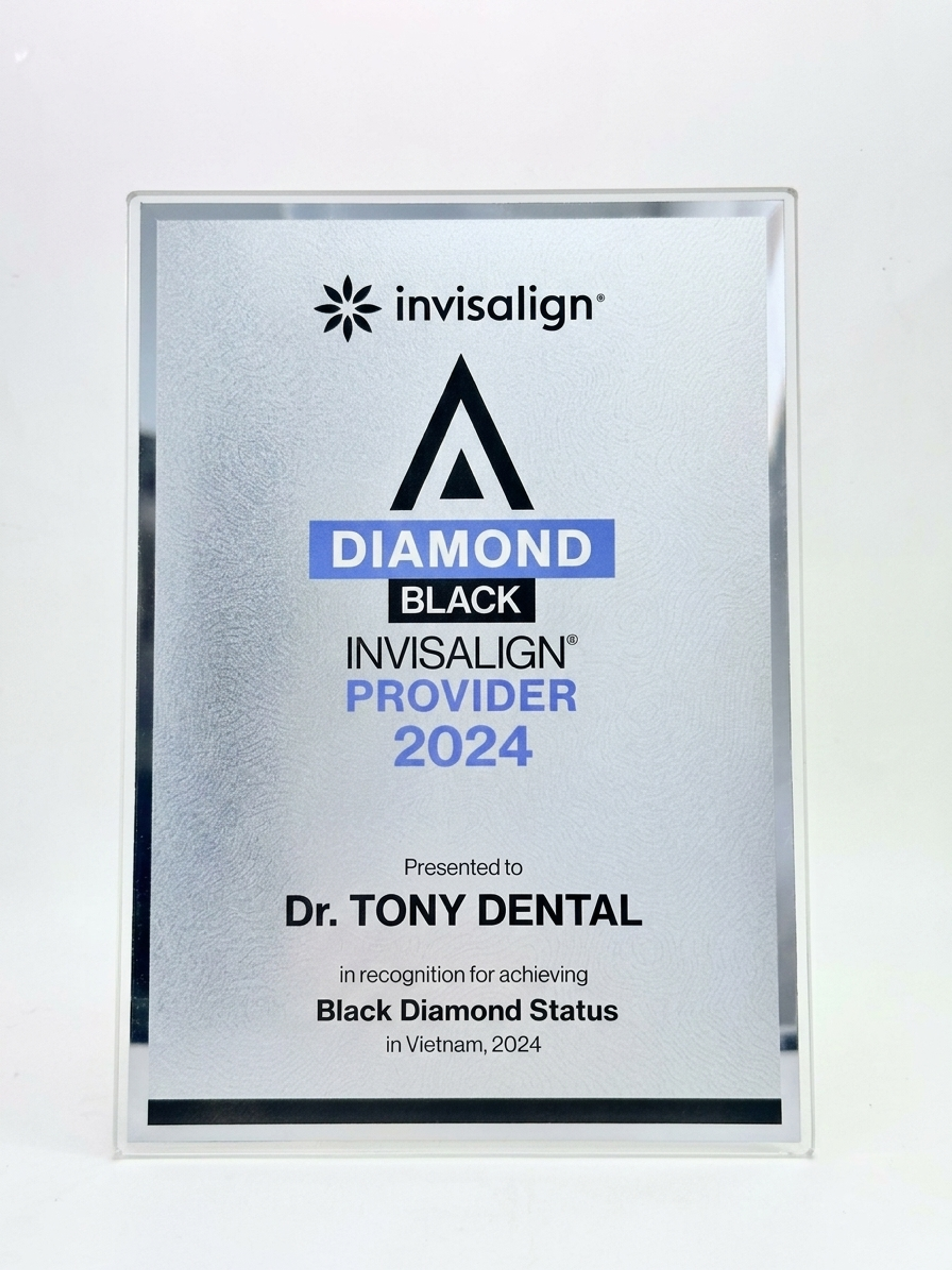
The clinic
Invisalign Black Diamond Provider
Granted to a practice, based on the capability of the clinic as a whole.
Align Technology's assessment is based on the number of cases actually treated, and it awards separate trophies to two parties: the individual clinician and the healthcare facility. That Dr Tony Dental maintains Black Diamond status in both categories side by side attests to the doctor's in-depth clinical capability and the centre's closed-loop quality-control process.
Education & training
Degrees
Odonto-Stomatology, graduated with distinction — Can Tho University of Medicine and Pharmacy
Inter-university diploma (D.I.U) in oral surgery — University of Bordeaux, France
Orthodontics & Invisalign
Ministry of Health · National Hospital of Odonto-Stomatology, Ho Chi Minh City — Basic Orthodontic Course, 5 months (2025)
Australia (Melbourne) — ACAS2023 Clear Aligner Symposium, Australasian Clear Aligner Society · 16 CPD hours (2023)
AORTA × HSD Academic Center — AORTA 2 Day Masterclass in Clear Aligners · 14 CPD hours (2020)
Align Technology, Ho Chi Minh City — Invisalign MasterClass (2023)
Align Technology Vietnam — Invisalign Step Up Program, four-month programme (2020)
Align Technology Vietnam — Invisalign Fundamentals Course (2019)
Align Technology — Invisalign APAC Summit for Orthodontists (2023)
Align Technology Southeast Asia — Align SEA Forum (2023)
Align Technology Switzerland GmbH — Invisalign Scientific Symposium, Digital Edition · 8 hours (2020)
Aesthetics & Digital Dentistry Academy (ADDA) — Advanced Study Club: Clear Aligner Orthodontic Masterclass (2020)
Aesthetic dentistry & veneers
Germany (Hamburg) — Ultimate Personalized Smile Design: Manual vs Digital, trained directly by Dr Galip Gürel at DMG Dental Training Center · 16 CME credits (2018)
Indonesia (Tangerang) — Non-prep & Modified Non-prep Veneers, Inlays, Onlays and Occlusal Veneers at ICDE – Ivoclar Vivadent · 16 hours (2018)
ICDE × Medent × Ivoclar Vivadent — Optimize ceramic veneer for esthetic and function, with Dr Stefan Koubi (2018)
Malaysia (Kuala Lumpur) — Masterclass “Predictable performance in aesthetic cases and full mouth reconstructions”, 26th MDA Scientific Convention · 2 CPD points, Category A2 (2019)
DMG (Germany) — The full power of the minimally invasive approach with veneers (2018)
Training certificates — see the scans
All 15 certificates below are published as scans, in chronological order from 2018 to 2025. Three are completion certificates carrying training hours; the rest are attendance certificates — each one labelled as what it is.

Non-prep Veneers & Modified Non-prep Veneers · Inlays, Onlays & Occlusal Veneers
ICDE — Ivoclar Vivadent, Tangerang, Indonesia
16 hours

The full power of the minimally invasive approach with veneers
DMG (Germany)

Optimize ceramic veneer for esthetic and function
ICDE × Medent × Ivoclar Vivadent — with Dr Stefan Koubi
Certificate of Attendance

Ultimate Personalized Smile Design: Manual vs Digital
DMG Dental Training Center, Hamburg — with Dr Galip Gürel. Meets KZBV, BZÄK and DGZMK standards
16 CME credits

Masterclass: Predictable performance in aesthetic cases and full mouth reconstructions
26th MDA Scientific Convention, Kuala Lumpur
Certificate of Attendance · 2 CPD points, Category A2

Invisalign Fundamentals Course
Align Technology, Vietnam
Certificate of Attendance

Advanced Study Club: Clear Aligner Orthodontic Masterclass
ADDA — Aesthetics & Digital Dentistry Academy
Certificate of Attendance

Invisalign Scientific Symposium — Digital Edition
Align Technology Switzerland GmbH
Certificate of Attendance · 8 hours

AORTA 2 Day Masterclass in Clear Aligners
AORTA × HSD Academic Center
Certificate of Completion · 14 CPD hours

Invisalign Step Up Program
Align Technology, Vietnam — four-month programme
Certificate of Attendance

ACAS2023 Clear Aligner Symposium
Australasian Clear Aligner Society, Melbourne
Certificate of Completion · 16 CPD hours

Align SEA Forum 2023
Align Technology, Southeast Asia
Certificate of Attendance

Invisalign APAC Summit for Orthodontists
Align Technology Inc.
Certificate of Attendance

Invisalign MasterClass
Align Technology — Ho Chi Minh City
Certificate of Attendance

Basic Orthodontic Course
Ministry of Health — National Hospital of Odonto-Stomatology, HCMC · 5 months
Certificate of Completion
Choosing an Invisalign doctor: 6 questions you should ask
Orthodontic treatment is a long journey that directly affects your health and your face. Below are the six core points I usually advise patients to look into carefully, wherever you decide to be treated.
- Does the Invisalign award belong to the doctor personally, or to the clinic?
- Invisalign has two separate ranking systems: “Provider” reflects the total case volume of an entire clinic, while “Doctor” is based on the hands-on experience of each individual clinician. A highly ranked clinic can still assign a newly qualified clinician to treat you. So ask plainly: “Who will be the doctor personally following my case from start to finish, and what is that doctor's own award?”
- Who actually works out your treatment plan?
- The manufacturer's software automatically produces an initial 3D simulation. But software cannot replace a clinician. The treating doctor must be the one who reworks the path each tooth takes, decides the forces applied and signs off the final plan. Ask the doctor to show you the plan and explain in person why they chose that approach for you.
- Can the doctor point out the “limits” of your case?
- In medicine, no method works for everything. Clear aligners also have limits: severe skeletal protrusion or underbite, or teeth with active disease. An experienced doctor will lay out the risks frankly and tell you where the method's boundaries are, rather than promising that every case can be finished perfectly with aligners.
- Is the doctor's training in-depth and ongoing?
- Clear aligner orthodontics is a distinct technique that requires doctors to keep up with new technology continuously. You don't need to count certificates of merit; look instead at whether the doctor's Invisalign training certificates run year after year without a gap, and which reputable body issued them.
- Has the doctor handled cases like yours before?
- Mild crowding and protrusion that needs extractions are two entirely different problems. A “total cases treated” figure sometimes matters less than how many cases the doctor has successfully resolved that started out exactly like yours. Don't settle for a generic gallery of attractive smiles; ask to see before-and-after photos of cases similar to yours.
- What happens if your teeth don't move as planned?
- The human body is not a machine, so teeth sometimes moving more slowly or drifting slightly from the software's plan is entirely normal. A serious treatment plan always allows for a “refinement” stage (rescanning and producing additional aligners). Before you start, ask clearly: how will refinement work, and is the cost of the extra aligners included in the package?
Which complex clinical presentations does the doctor take on?
Every malocclusion calls for a protocol of its own. Our overriding diagnostic principle, though, is this: the cause — dental or skeletal — must be established before any force is applied.
Protrusion
The first thing to establish is whether the protrusion comes from incisors tipped forward or from the skeletal structure of the jaw. Dental protrusion can be treated effectively with Invisalign. Where the protrusion is pronounced, the usual clinical indication is extracting two premolars to open space for retracting the front teeth. Extraction cases need a course several months longer, so that the space closes safely. Where the protrusion is skeletal, however, the cephalometric film is what decides the line of treatment.
Underbite
Anterior crossbite of the incisors — dental underbite — is usually refined well with clear aligners. Where the underbite comes from an overgrown lower jaw, however, that is a serious skeletal discrepancy calling for joint orthodontic and surgical consultation. The line between the two cannot be settled by eye, which is why a cephalometric film is a mandatory standard at the first consultation.
Crossbite
Left untreated, this discrepancy leads to asymmetric tooth wear and injury to the temporomandibular joint (TMJ). Invisalign treats many posterior crossbites effectively through physiological arch expansion. The limit of that expansion, though, depends on the actual skeletal base. In an adult whose arch is narrow because of its skeletal structure, the indication has to be a dedicated skeletal expander or surgery — aligners must never be used to push teeth past the safe limit of the alveolar bone.
Open bite & deep bite
Open bite — incisors that never meet — affects speech, while deep bite drives the lower teeth against the upper gum. Both demand extremely exacting control of the vertical dimension, something Invisalign does very well through precisely designed attachments. With open bite in particular, the doctor must screen for parafunctional habits such as tongue thrusting. Unless that cause is eliminated, the risk of relapse once the aligners come off is high.
Retreatment of cases that fell short
This is the most complex clinical group and the one calling for the greatest care. We understand the anxiety you carry after a course of treatment that fell short. At Dr. Tony Dental the first step is not fitting new aligners but “decoding” the existing record: analysing where the previous plan went wrong, assessing the movement that has already taken place, and measuring the biological room left around the roots. The doctor will be transparent from the outset about whether your case can be retreated in full, or has to accept a certain medical limit in order to preserve the natural teeth.
Frequently asked questions about the doctor & clinical expertise
How does the Invisalign Black Diamond Doctor standing differ from Black Diamond Provider?
Align Technology assesses and awards trophies independently to two parties — the individual clinician (Doctor) and the healthcare facility (Provider) — on the basis of the number of clinical cases actually treated. That Dr. Tony Dental maintains Black Diamond standing for both Dr Ho Le Bao An and the practice as a whole attests to the in-depth capability of the person leading it, and confirms a closed-loop, consistent quality-control process across the centre.
Do you take on retreatment cases — treatment elsewhere that fell short?
Yes — though this is a complex clinical group calling for the greatest care. The first consultation is not aimed at fitting new aligners straight away, but at letting the doctor re-analyse the existing record and take imaging to assess the room left in the alveolar bone and the movement that has already taken place. After that screening, the doctor will be transparent from the outset about whether your case can be retreated in full, or needs a safe medical limit set in order to preserve the teeth.
Why is a cephalometric film required before the treatment plan is settled?
Because looking at the face cannot accurately separate protrusion or underbite caused by tipped teeth from the same appearance caused by the skeletal structure of the jaws — two groups of causes with entirely different lines of treatment. A cephalometric film supplies data on the relationship between the upper and lower jaws, and it is the only scientific basis on which the doctor can conclude whether your case can be treated with orthodontics alone, or has to go to joint consultation with surgery.
Do you treat patients travelling from distant provinces?
Yes. The biomechanical advantage of Invisalign clear aligners is that patients change trays themselves at home, which spaces out follow-up visits compared with traditional fixed braces. For patients coming from a distance we set up an optimised plan, grouping the clinical procedures that require attendance into a single appointment so you travel as little as possible, combined with close remote monitoring.
How long does a course of Invisalign treatment usually take?
Most clinical cases finish within about 12–24 months. Cases that only lightly refine the front teeth can be over in 6–12 months; complex cases indicated for extraction, by contrast, need a longer course. The exact time is only established once the doctor has built the 3D digital plan (ClinCheck). That progress depends heavily on your cooperation, though: aligners only deliver their force when worn 20–22 hours a day. Falling short of that wear time means the result will not come out as the plan projected.
Can patients in their 30s and 40s have Invisalign treatment?
Absolutely. Teeth can move at any age, on the prerequisite that the periodontal foundation and alveolar bone are still healthy — age is not the barrier. In adults the bone is denser, so movement can be a little slower, and rates of periodontal disease or pre-existing restorations are higher as well. A first adult consultation therefore always comes with a thorough periodontal screening.
Can teeth with crowns or veneers be treated with aligners?
It can be, but the doctor needs to be told before the plan is built. Attachments — the points that deliver force — always bond less well to ceramic than to natural enamel, which requires the doctor to recalculate where that force is placed. Beyond that, once the teeth move into a correct bite, some older ceramic restorations may no longer be compatible in shape and will need remaking. At Dr. Tony Dental we forecast this and set the course out transparently from the start, so that no cost arrives unplanned.
Does Invisalign treatment always require extractions?
Not necessarily. Under a philosophy of preserving as much natural tooth structure as possible — minimally invasive treatment — extraction is the last indication, reached when space has to be created and other techniques cannot supply it. Before deciding to extract, the doctor gives priority to two solutions: interproximal reduction (IPR) for small amounts of space, or arch expansion where the skeletal base allows. Mild to moderate crowding usually needs no extractions; only in cases of pronounced protrusion or severe crowding is extraction the best way to hold a stable long-term result.
How is the cost of an Invisalign plan with the doctor worked out?
The total cost depends on how complex the malocclusion is and how many aligners the plan requires. Standard price ranges for each package are published transparently. The final fee, though, is only settled once the doctor has gathered the full set of X-ray data and 3D impressions and completed the individualised plan. Anything that has to be dealt with before treatment starts — periodontal work, fillings, endodontics — is set out clearly as a separate item at the first consultation.