What veneers are made of
How thin are e.max Press veneers, and how long do they last?
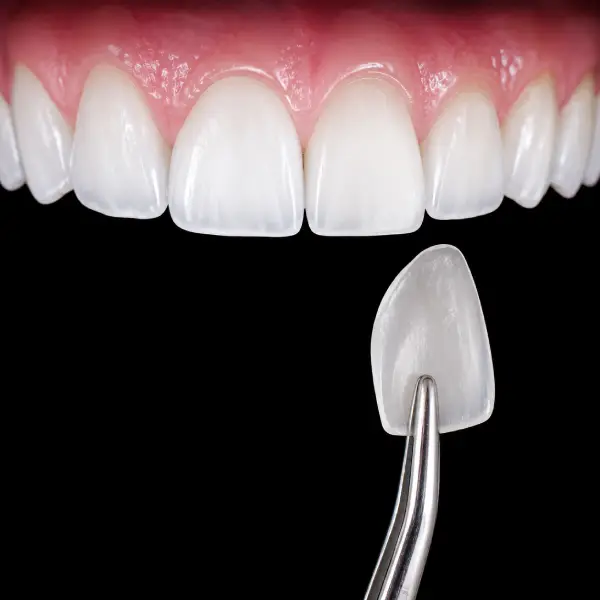
Every porcelain veneer at Dr Tony Dental is made from IPS e.max Press, a glass-ceramic from Ivoclar Vivadent in Liechtenstein. Before you agree to having your teeth filed, it's worth knowing how thin this ceramic is, how it's made, how long it lasts, and what it can't do.
At a glance
- Material
- Lithium disilicate glass-ceramic, pressed from ingots
- Manufacturer
- Ivoclar Vivadent, Liechtenstein
- Minimum ceramic thickness
- 0.3 mm for a veneer, as published by the manufacturerThis isn't how much of your tooth gets filed down.
- Flexural strength
- 470 MPaHow much bending the ceramic takes before it breaks, measured in the manufacturer's lab.
- At Dr Tony Dental
- Used for every porcelain veneer, with a 10-year warrantyWhat the warranty covers
What is IPS e.max Press?
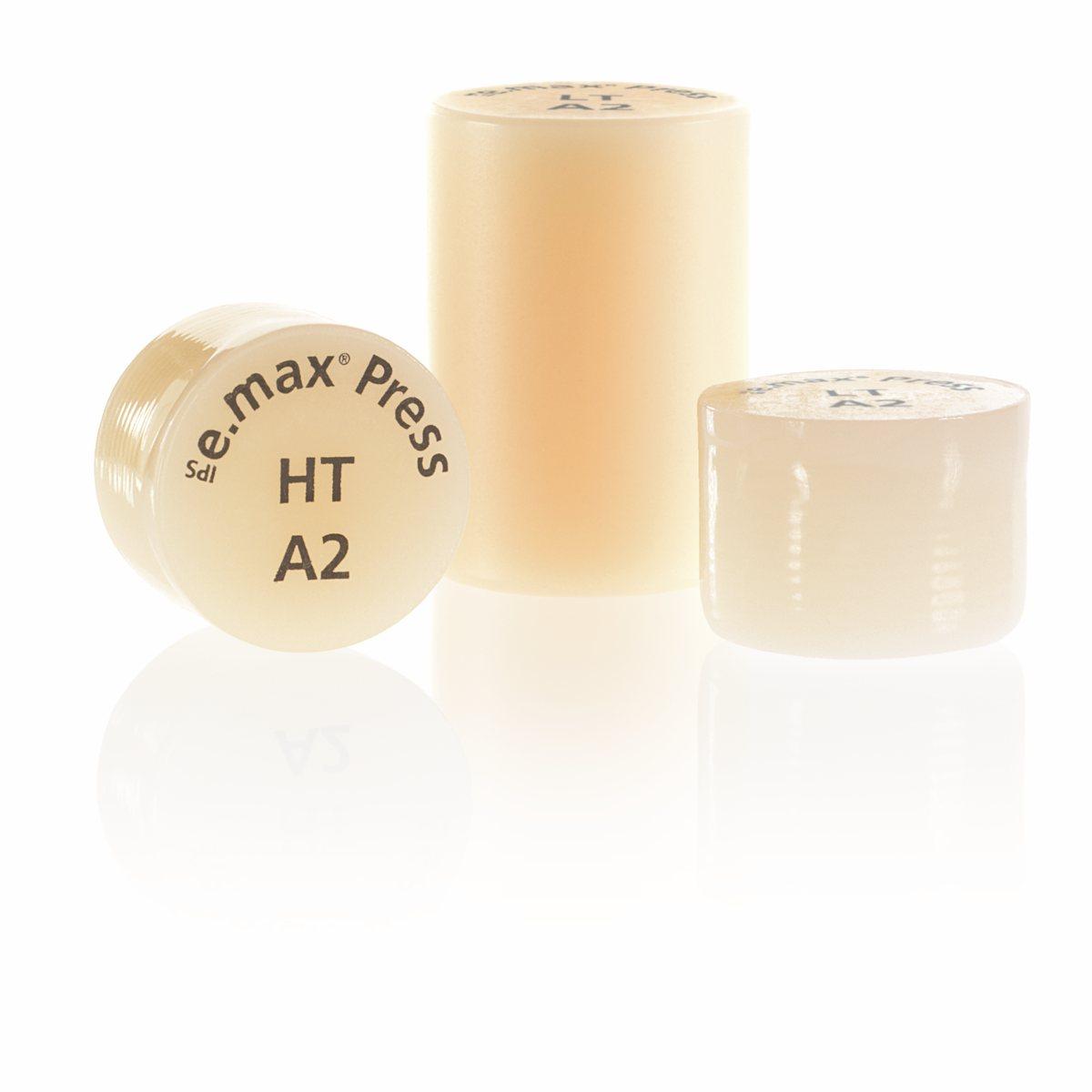
IPS e.max Press is a lithium disilicate glass-ceramic made by Ivoclar Vivadent. It comes as small pre-made cylinders called ingots, like the three in the photo. At the dental lab, an ingot is heated until soft and pressed into a mould shaped like your veneer, hence the “Press” in the name.
Like enamel, glass-ceramic lets some light through. So even a thin layer over the front of a tooth keeps a slightly see-through edge, rather than looking opaque and one flat colour.
There's also IPS e.max CAD, sold as blocks that a machine mills into shape. Veneers at Dr Tony Dental use the pressed kind.
What does “HT A2” on the ingot mean?
Each ingot carries two codes: the letters tell you how translucent it is, and the code after them is the shade.
- HT
- How translucent the ingot is. HT is a highly translucent type.Short for “high translucency”.
- A2
- A shade on the VITA scale, the tooth shade guide widely used in dentistry.
HT
very translucent
MT
medium
LT
less translucent
MO
fairly opaque
HO
very opaque
HT ingots come in 16 shades, A1 to D4 on the VITA guide, plus 4 bleach shades (BL1–BL4). You choose the shade together with the dentist, and the dentist decides which ingot to use for each tooth after examining you. The darker your natural tooth, the more the porcelain has to hide, so the layer is usually thicker and the tooth may need more filing.
From ingot to veneer
Making the veneers takes about 3–5 days. You wear temporaries while you wait.
Shape and impression
The veneers follow the shape you tried with your trial smile and an impression of your teeth taken after filing.
Making a wax model
A wax model of each veneer is set in a heat-resistant mould, which is heated until the wax burns out, leaving a veneer-shaped hollow.
Pressing
The ingot is heated until soft and pressed into the hollow.
Finishing
The veneer is coloured, glazed and tried on a model of your teeth to check the fit, then sent back to the clinic.
0.3 mm of what, exactly?
0.3 mm veneer
1.0 mm crown
Same IPS e.max Press ceramic. Both bars drawn to scale.
The manufacturer's minimum for the ceramic of a veneer is 0.3 mm. That's the thickness of the porcelain, not how much tooth is filed away. A crown in the same ceramic has to be at least 1.0 mm thick and covers the whole tooth, so the tooth needs more filing.
For a veneer, usually only a thin layer of enamel is filed from the front of the tooth. Teeth with dark stains that whitening can't lift, or teeth that stick out, may need more. Filed enamel doesn't grow back, so the final thickness is decided by the dentist for each tooth after your examination.
How can something this thin handle chewing?
Partly because of the ceramic itself. The manufacturer publishes a flexural strength of 470 MPa, measured in the lab: how much bending force the ceramic takes before it breaks. The rest comes down to the bond. The adhesive locks the veneer onto the enamel, so porcelain and tooth share the load. That only works on healthy enamel, which is why decay or inflamed gums have to be treated first.
How much of your tooth needs filing?
It varies from tooth to tooth, so it takes an examination to answer.
How long do they last?
Veneers cope with everyday chewing, but they can still come off, chip or crack, and then need re-bonding or replacing. With proper care, veneers in general last 10–15 years on average.
For pressed lithium disilicate such as IPS e.max Press, here are two figures from the research.
95.3%
of IPS e.max Press restorations still in use, averaged across clinical studies with up to 16.9 years of follow-up.
Compiled by the manufacturer, across several kinds of restoration, not just veneers.
97.4%
of pressed lithium disilicate veneers still in use after 10 years, in a study that followed 364 veneers in 41 people.
Over the 10 years: 0.55% fractured, 1.09% came off.
These are study figures, not the clinic's own success rate. In the 10-year study, the veneers were bonded by two experienced dentists following a strict protocol. How long yours last also depends on your bite, whether you grind your teeth, and how you look after them. If you grind at night, the dentist may prescribe a night guard.
Clinic policy
10-year warranty: if a veneer comes off, chips or cracks, come to the clinic. The dentist checks it and makes you a new one at no charge. You'll get a warranty card.
Besides the ceramic, what else affects the result?
Even with the same ceramic, a lot depends on what happens before and after bonding.
Checking that your teeth are suitable
The dentist checks your teeth, gums and bite first. Decay or gum inflammation has to be treated before any veneers go on.
Trying before filing
You try the new shape on your own teeth with a trial smile. There's no charge, even if you decide not to go ahead.
Preparing both surfaces
The inside of the veneer and the enamel are both treated first, so the adhesive grips them firmly.
Regular check-ups
A check-up every 6–12 months, so the dentist can look at your veneers and gums.

Dr Ho Le Bao An
Medical Director
Reviews treatment plans and oversees the quality of porcelain veneer cases at the clinic. Trained in minimally invasive veneers in Germany and at ICDE, Ivoclar Vivadent's dental education centre.
Frequently asked questions
- Does e.max contain metal?
- No. IPS e.max Press is a glass-ceramic and contains no metal.
- Can porcelain veneers be whitened?
- No. Whitening gel doesn't change the colour of porcelain. If you want whiter teeth, whiten them first, then choose the porcelain shade.
- How do I know my veneers are IPS e.max Press?
- After bonding, the clinic gives you a record of the ceramic type, shade and bonding agent used, together with a 10-year warranty card.
- How much do e.max veneers cost?
- Veneers are priced per tooth, and the price list is linked just below. Your total is the price per tooth times the number of teeth the dentist recommends after examining you, and every patient pays from the same price list.See e.max veneer pricing