Benefits of porcelain veneers
Comparing porcelain veneers and full crowns
Both are porcelain restorations bonded to your own tooth. The key difference is how much tooth has to be filed away: a veneer covers only the front, so more of your natural tooth is kept, while a full crown needs the tooth filed all the way around so it can cover the whole tooth.
How much of the tooth is filed?
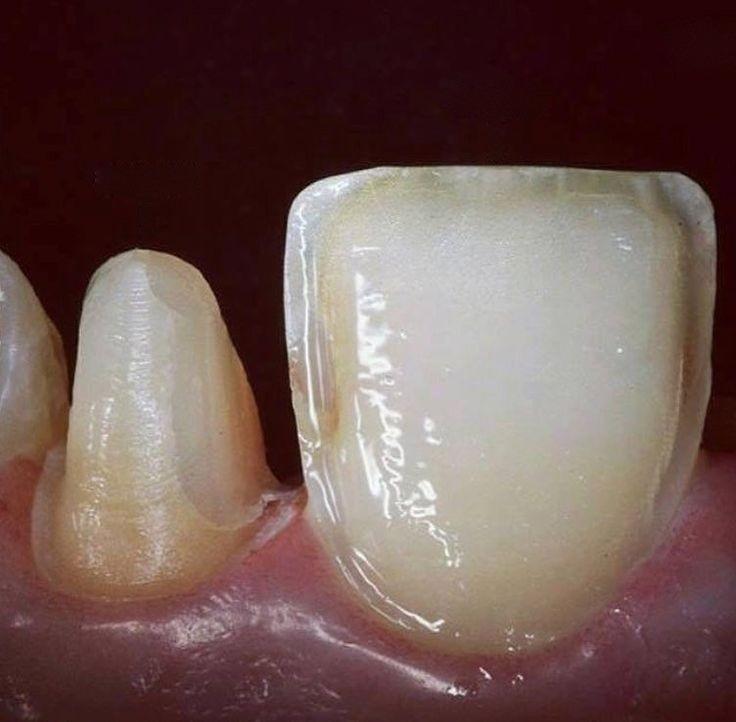
Two teeth after filing, before the porcelain is fitted
Crown
63–72%
of the tooth's crown filed away
Filed all the way around the tooth
Veneer
3–30%
of the tooth's crown filed away
Mainly the front surface; the inner side of the tooth is largely left as it is
The porcelain pieces
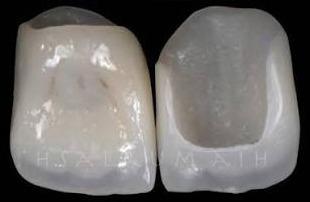
Illustrative photos from an outside source, not this clinic's cases. How much is filed varies from tooth to tooth.
Percentages: laboratory measurements on resin model teeth.
0.3 mm is the manufacturer's published minimum thickness for an IPS e.max Press veneer, not the amount filed. How much is filed, and the final thickness, are decided by the dentist for each tooth after your examination.
Point by point
| Point | Veneer | Crown |
|---|---|---|
| Filing | Minimally invasive: usually only a thin layer of enamel is filed from the front of the tooth. Note: teeth with dark staining that whitening can't lift, or teeth that stick out, may need more filing. | A crown needs the tooth filed all the way around to make room for porcelain that covers the whole tooth. |
| Shade and shape | The shade and shape are made individually for each tooth and chosen with you to suit your face. You try the new shape directly on your own teeth before any filing (trial smile). | A crown has thicker porcelain and covers the whole tooth, so it hides dark staining better and can change the shape more. |
| Durability | Porcelain resists staining. Veneers in general last 10–15 years on average with proper care, and come with the clinic's 10-year warranty (see the terms). | A crown covers the whole tooth and is usually recommended to protect a root-canal-treated tooth or one that has lost a lot of structure. |
| Chewing | A veneer is thin and bonded firmly to the enamel, so it usually doesn't feel bulky when you eat. Avoid using your teeth to open bottle caps or chew ice. | A crown withstands force well and is usually recommended for back teeth (molars), which take heavier chewing forces. |
Which one is right for you?
Both methods usually involve filing the tooth, and filed enamel is a change that cannot be reversed. Which restoration suits you depends on the clinical assessment of each tooth.